
Quartzite is often described as harder than granite, which is why many homeowners consider it for bathroom countertops. That reputation is well earned, but it doesn’t tell the full story.
Bathrooms place different demands on a countertop than kitchens do. Moisture, daily products, and long-term maintenance all play a role here.
After working with countless quartzite countertops in bathrooms, we’ve seen where quartzite performs exceptionally well, and where thoughtful planning makes all the difference.
What Quartzite Is, and Why Is It Often Confused With Quartz?
Quartzite is a natural stone that forms when sandstone is exposed to extreme heat and pressure deep within the earth. Over time, that process fuses quartz grains together, creating a dense, durable quartzite slab with natural veining and variation. Each slab is unique, which is part of its appeal in high-end bathroom design.
Quartzite is often confused with quartz because of the name, but the materials are fundamentally different. Quartz countertops are an engineered stone, made by combining quartz particles with resins and pigments. Quartzite, on the other hand, is quarried as a solid slab and shaped without added binders.
Another common misconception is that being harder than granite means quartzite is maintenance-free. Quartzite is harder than granite, but it’s still a porous countertop material. In bathrooms, that means sealing and care matter, especially on vanity surfaces exposed to moisture and daily products.
The Pros of Quartzite Countertops in Bathrooms
1. Natural Beauty and One-of-a-Kind Appearance
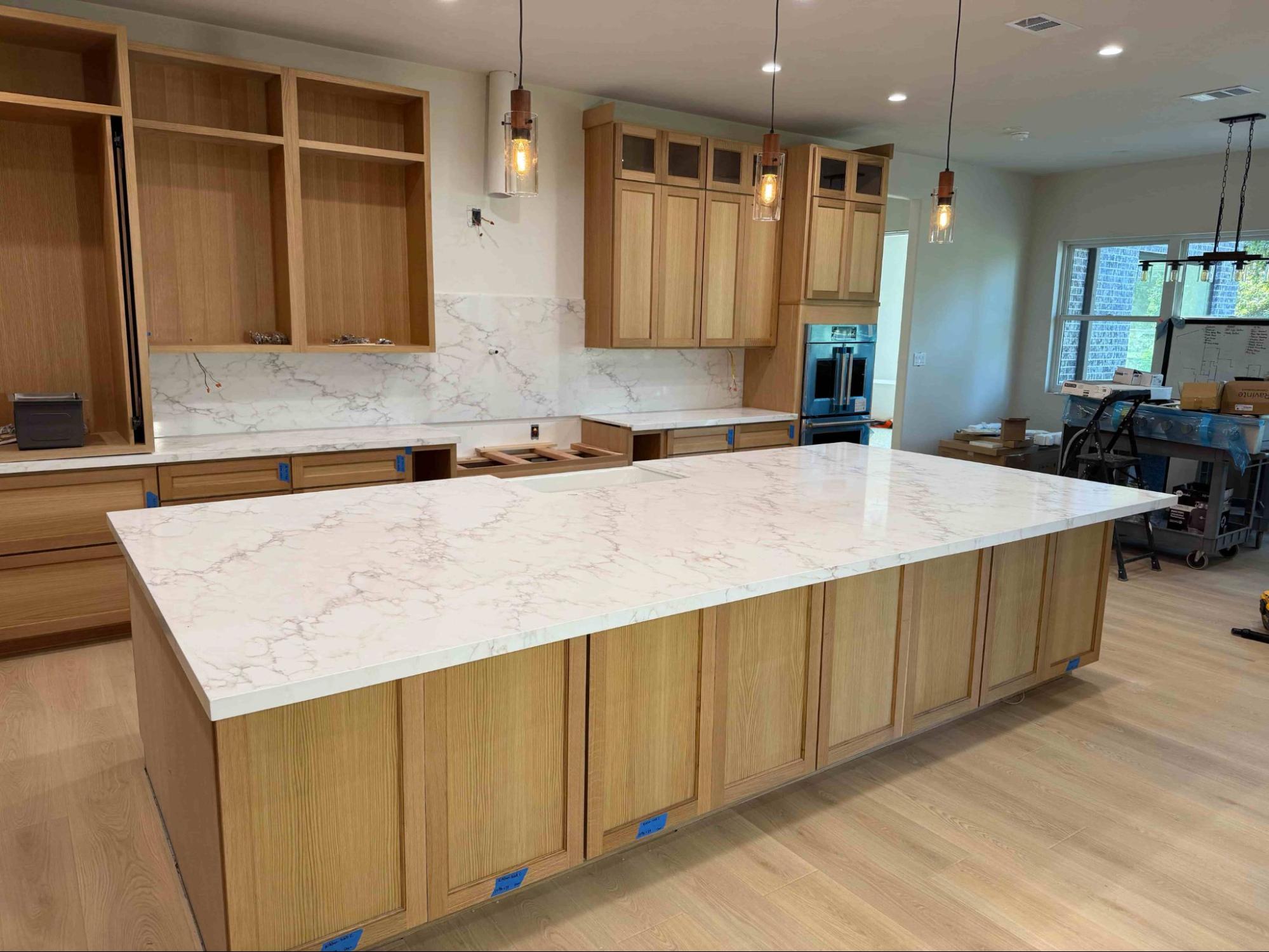
One of the biggest reasons homeowners choose a quartzite countertop for a bathroom is its natural beauty. Quartzite is a metamorphic rock formed under extreme heat and pressure, which gives each slab unique veining and variation. No two surfaces look exactly alike.
In bathrooms, quartzite is often selected in soft whites and grays, with subtle movement that adds depth without overpowering the space. If you prefer natural stone over engineered uniformity, the beauty of quartzite and its organic veining and color are hard to replicate.
2. Strength and Scratch Resistance
Quartzite is extremely hard and resistant to scratches, making it a good choice for bathroom vanities that see daily use. Items like cosmetics, grooming tools, and regular countertop contact are unlikely to damage the surface under normal conditions.
Compared to marble, quartzite generally holds up better in bathrooms, especially when it comes to scratching. Its durability is one of the reasons quartzite is often considered alongside granite in areas like kitchens and bathrooms, even though the day-to-day demands are different.
3. Better Tolerance to Heat and Moisture Than Some Natural Stones
Bathrooms don’t experience the same heat exposure as kitchens, but quartzite can still come into contact with hot styling tools. Quartzite is formed under extreme heat and pressure, which gives it strong heat tolerance compared to many materials.
Even so, placing hot items directly on the surface isn’t recommended. Using heat protection helps prevent thermal shock and preserves the finish over time.
When it comes to moisture, quartzite is a natural stone and is not moisture-resistant. Proper sealing is essential, especially in bathrooms where water, steam, and daily products are part of everyday use. With regular sealing and routine care, quartzite can perform well in your bathroom.
The Cons of Quartzite Countertops in Bathrooms
1. Quartzite Is Porous and Requires Sealing
As mentioned earlier, quartzite is a porous natural stone. While it’s less porous than marble, it still requires proper sealing to resist stains.
In bathrooms, water, cosmetics, and everyday spills are common. When sealing is skipped or allowed to wear down, moisture and residue can penetrate the surface, leading to discoloration over time. Sealing isn’t difficult, but it is necessary.
2. Etching, Staining, and Maintenance Expectations
Quartzite is durable, but it’s not maintenance-free. Depending on the stone’s mineral composition, some quartzites can be susceptible to etching from acidic products. This is less common with quartzite than with marble, but it’s still something homeowners should be aware of.
Cleaning expectations are straightforward but specific. Mild soap and water are recommended, while harsh cleaners and abrasive products should be avoided. Understanding these maintenance needs is part of making an informed decision.
Where Quartzite Works Best in Bathrooms, and Where It Doesn’t
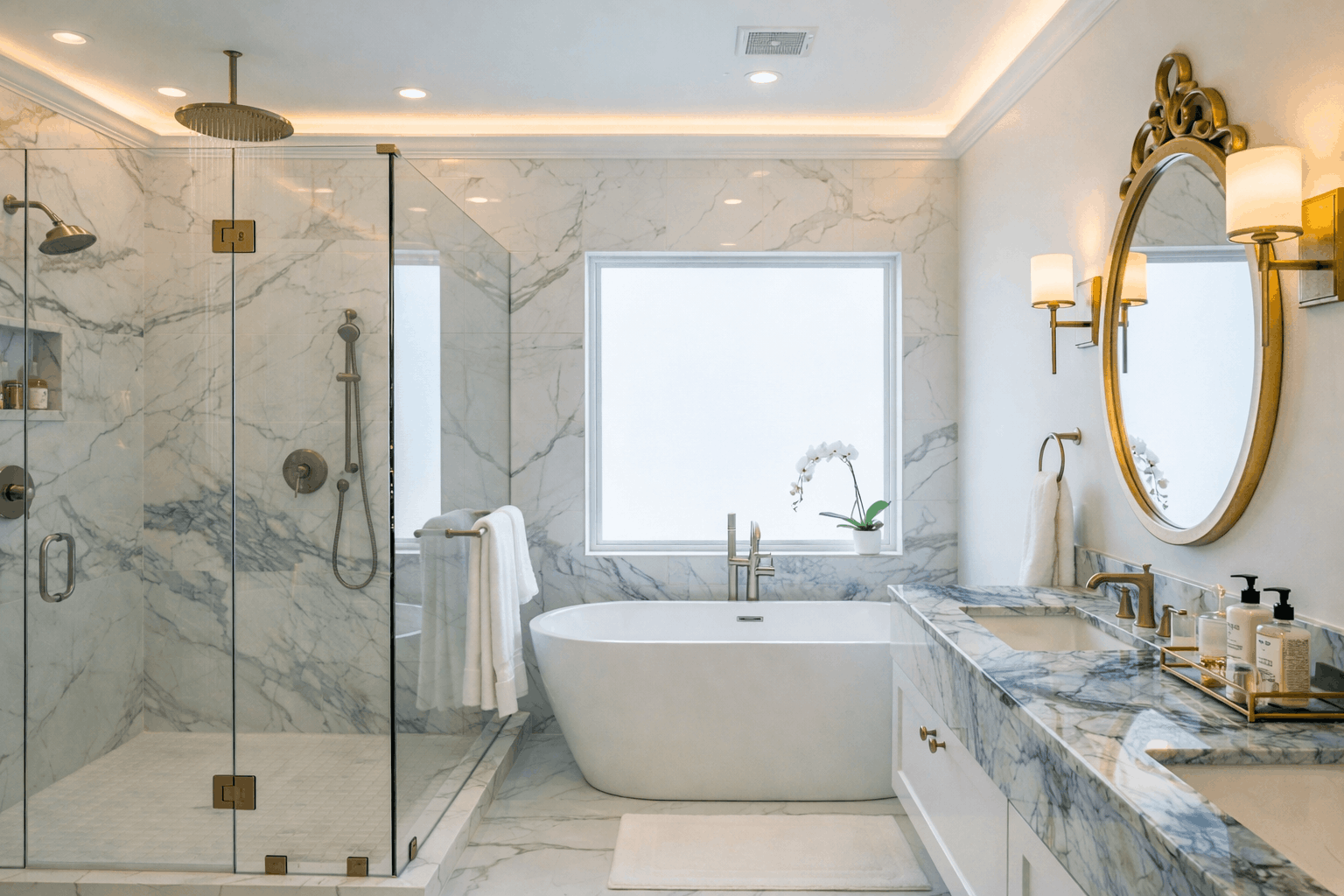
Quartzite can be an excellent choice for bathroom countertops, but it’s not ideal for every bathroom or every situation. The key is matching the material to how the space is actually used.
Primary Bathroom Vanities vs. Secondary Baths
In primary bathrooms, quartzite works well when homeowners are comfortable with ongoing care. With proper sealing and routine maintenance, quartzite can deliver durability and natural beauty on vanity surfaces.
In secondary bathrooms or guest baths, quartzite might also make sense, especially when visual impact is a priority and daily use is limited.
Low-Use Powder Rooms vs. High-Traffic Family Bathrooms
Quartzite is often a strong fit for powder rooms and low-use bathrooms, where exposure to water, products, and heavy daily use is minimal. In high-traffic family bathrooms, maintenance expectations matter more. Frequent spills, cosmetics, and cleaning increase the need for consistent care, which may influence whether quartzite is the right choice.
Vertical Surfaces and Backsplashes vs. Horizontal Countertops
Quartzite performs especially well on vertical applications like backsplashes and wall panels, where water slides off the surface instead of just sitting on it. On horizontal countertop surfaces, proper sealing and mindful use become more important to protect the stone over time.
When Quartz and Other Engineered Stones May Be the Better Option
In bathrooms where low maintenance is a top priority, quartz or other engineered stone surfaces can be a better fit. For homeowners deciding between materials, understanding these trade-offs helps make an informed decision about when to choose quartzite and when another countertop material may better suit the space.
Get Expert Guidance Before Choosing Quartzite
Quartzite adds natural beauty and durability to a bathroom, but its performance depends on sealing, fabrication, and how the space is used day to day. Understanding those details is what helps homeowners choose confidently, not emotionally.
At KAT Fabricators, we help clients understand the pros and cons of materials like quartzite, compare them to quartz and other options, and select what truly fits their space and lifestyle.
Next steps:
- Schedule a Free Estimate
- Talk With a Countertop Specialist
- Explore Bathroom Stone Options With Our Team
FAQs: Common Questions About Quartzite in Bathrooms
Does quartzite require sealing in a bathroom?
Yes. Quartzite requires sealing, especially in bathrooms where water, steam, and daily products are common. While quartzite is less porous than marble, it’s still a natural stone and needs proper sealing to help keep the countertop in pristine condition over time.
Can quartzite stain from makeup, toothpaste, or spills?
It can. Unsealed or poorly maintained quartzite may absorb moisture or residue from cosmetics and spills. With proper sealing and prompt cleanup, staining risk is significantly reduced—but it’s not eliminated entirely. This is one of the key cons of quartzite countertops homeowners should understand upfront.
Is quartzite harder than granite and marble?
In most cases, yes. Quartzite is one of the hardest natural stones used for countertops and is typically harder than both marble and granite. That hardness contributes to strong scratch resistance, but it doesn’t make quartzite maintenance-free.
Is quartzite a good choice for busy bathrooms?
Quartzite can work in busy bathrooms, but it depends on expectations. In spaces with heavy daily use, frequent cleaning, and many products, maintenance becomes more important. Homeowners who prefer minimal upkeep may want to explore engineered options instead. This is where weighing the pros and cons of quartzite really matters.
How often does quartzite need to be resealed?
Sealing schedules vary by slab and use, but many bathroom installations benefit from resealing every one to two years. A simple water test can help determine when resealing is needed. Consistent care helps protect the stone’s natural beauty.
Is quartzite worth the cost for a bathroom vanity?
Quartzite can be more expensive per square foot, especially compared to quartz or other engineered surfaces. For homeowners who value unique veining, natural stone, and a high-end look, investing in quartzite can make sense. For others, the added cost and maintenance may outweigh the visual appeal.